Archive for the 'Process' Category

Oct 08 2008

Insulation Competition Showcases the Best of the Installers

Published by DCraig under Green, Home Improvement, Process

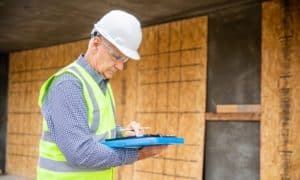
What do you do if you have taken the process of insulating a home from science to art?  Well, you might try entering a competition. That’s what Ray Blackwater with Durango, Colorado-based San Juan Insulation & Drywall did and he is now the “Best Insulation Installer in America” for 2008.

According to Insulate America, Blackwater defeated last year’s champ Salvador Hererra from Insulating Inc. in Raleigh, NC. This year’s three other regional winners who competed for the crown included:

Jesus Campanero from Chico, CA

Matt Fletcher from West Boylston, MA

Martin Sanchez Soto from Charlotte, NC

The competitors had to install insulation of various types in a mock up of a building that included all the usual things that get in the way or make the job difficult, like electrical boxes, wires, pipes, headers and even a vaulted ceiling. Judging criteria included quality of workmanship, adherence to safety, and speed and productivity. New this year, the sixth year of the competition, was the amount of scrap they each generated.

October is Energy Awareness Month so Johns Manville in association with Insulate America sponsors the competition to draw attention to the professionals that give their all to help make sure buildings achieve their maximum energy efficiency.

To me these are great initiatives. There really aren’t enough efforts that showcase the day-to-day work construction people do. Especially with the slant of showing it in a professional sense. You can find all kinds of people showcasing the negative actions of people in construction, so these kinds of things help to balance the picture for those who are willing to look a little deeper.

Ray Blackwater of Durango, CO. (Photo: Business Wire)

Ray Blackwater of Durango, CO. (Photo: Business Wire)

No responses yet

Sep 23 2008

Steel Framing Gets Panelized

Published by DCraig under Materials, Process

Many people think of homes as the place where panelized construction is most common. If that is true then the idea is being challenged by companies in the commercial sector.

A case in point is the recent announcement by Codding Steel Frame Solutions that it had manufactured and delivered 1000 linear feet of exterior wall panels for the Pre-built Steel Wall section Moved into Placeconstruction of a Whole Foods store.

The company claims that steel framing members provide more dimensional stability than lumber and they will not rot or support mold growth. The green aspects claimed include a high recycled content and material that is 100 percent recyclable at the end of its life. Codding does the manufacturing of the panels in a solar powered factory.

Codding claims that two people can build 250 linear feet of wall in 12 hours and erection time at the site is cut by at least 50 percent using half as many framers.

No responses yet

Sep 19 2008

Ike Reveals the Fragility of Roofing Moisture Barriers

The initial hurricane Ike damage assessment is in from the Institute For Business and Home Safety (IBHS). After two days of surveying damage in Houston, Galveston and the surrounding areas the researchers discovered water intrusion at roofs was the greatest point of concern resulting from this storm.

As might be expected older roofs didn’t hold up as well as newer ones and the points of damage initially originated with the underlayment rather than the sheathing. Of course buildings in Galveston that weren’t elevated above flood stage received the worst damage. Newer shingle, tile and metal roofs performed well. The report didn’t define “newer.”

Interestingly, areas 50 miles removed from metropolitan areas had higher wind gusts. Houston damage was called similar to category 1 hurricane conditions, while those in Raywood were rated similar to category 2 conditions.

The IBHS recommends in this publication that roof underlayment in many of the Atlantic and Gulf States use a full layer of self-adhering polymer modified bitumen membrane that meets ASTM D1970. Outside of those areas where local codes don’t allow that system you can use other products like reinforced synthetic underlayment to substitute for 15# and 30# felt. They have a higher tear resistance and can survive longer in the elements before deteriorating.

Another option is at least 4 inches (w) of self-adhesive flashing tape used at all horizontal and vertical roof deck joints. Asphalt impregnated 30# felt installed with ring or deformed shank fasteners that have at least one-inch diameter caps and are spaced six inches along laps and 12 inches in the field is another option. This process also requires a self-adhering polymer modified bitumen cap sheet or a similar treatment applied with a hot mop method. Closed cell urethane based foam adhesive\insulation applied to the attic side of all joints between roof sheathing panels is another method of achieving secondary water protection.

You can see several photos of the damages to buildings from Ike here.

No responses yet

Sep 18 2008

Construction Robotics Working From Top Down

Published by DCraig under Process

Construction robotics have always been challenged by the construction environment. So, robotic efforts have largely focused on automation-types of things that can be accomplished in a factory setting. But that is changing.

Vulcan Engineering, makers of equipment for the steel forging industry, has introduced a line of robots that are expected to make some inroads to construction by becoming material handlers. They are built with sealed components and since they can withstand the temperatures and other stresses associated with melted metal, they can probably deal with most anything a construction site might throw at them.

Carnegie Mellon University and Caterpillar have been working on a driverless dump truck with a 240 ton payload. Driven with remote controls the units are also fitted with sensors that cause them to back-off if they hit an object. This is part of a larger on-going automation effort on the part of BHP, a mining company.

The 24th International Symposium on Automation and Robotics in Construction (ISARC) was held in 2007 and at that time the symposium reported that automation technologies were revolutionizing the processes used to build things and that the challenges of the global construction boom coupled with rapid advances in technology had finally made automation for construction cost effective.

At Purdue University there is a page devoted to emerging construction technologies and one of the topics includes automated bricklaying. In most countries human labor to do the same work is still more cost effective but apparently the machine\concept has been having some run time in Germany. One sticky problem that had to be overcome was the application of the mortar to the bricks. That was solved by using a dipping method.

Robots in the classic sense are still a long way from becoming ubiquitous to construction sites. In the meantime the automation of tasks and process and the refining of how tasks and processes mesh together are bringing about changes in how things have been traditionally done. It appears that automation and robotics are going to first become entrenched in the office functions of the industry before making inroads to the field.

No responses yet

Sep 03 2008

Uncovering Unique Plumbing Tricks

Published by DCraig under Process

There are times when you don’t want to shut off the water when making a plumbing repair. One example is when the supply is serving a large number of people like in municipalities or apartment complexes. It isn’t so much that people will be without water as it is a sanitation issue. As the lines loose pressure there are all sorts of contaminants that can be drawn into the system and it can be next to impossible to prevent all of them so then the system needs to be sanitized.

I learned about these techniques first hand on an apartment project under renovation. In one instance there had never been shutoffs installed per unit, or even per building. There was one shutoff for the whole multi-building complex. The water was distributed to the units two at a time through inch-and-a-quarter copper.

The plumbers brought in a CO2 bottle that hooked to a special clamp. The clamp was attached to the supply side of the pipe a safe distance from where the pipe needed to be cut. They applied CO2 to the clamp and it froze the water, essentially creating a plug of ice inside the pipe. They did the cut, and then fit and soldered the new valve all without a gusher.

Another time a backhoe tore into a two-inch copper line at the bottom of a six-foot deep hole. If you’ve ever wondered how much water a two inch line can flow suffice it to say it is a lot of water really fast. The hole filled in less than three minutes as a crew struggled to get a trash pump running so it could be drained for the repair. It had been a rough day so once the initial emergency was under control I had to go back to the office and get an aspirin. I didn’t actually see the repair but it involved using a hot tap, or sleeve of some kind.

If you are curious about some of these repair solutions take a look at PipeMan Products or Qwik-Freezer. These things are not cheap, but when you consider the costs of sanitizing miles of pipe along with the attendant liability…well, it’s no-brainer.

No responses yet

Next »